What Is Exibran Radar, and How Does It Measure What AI Says?
Exibran Radar is the private tool I use to ask AI assistants a business's buyer questions, save every answer and measure who gets picked. What it does and where it falls short.

On this page
Quick answer
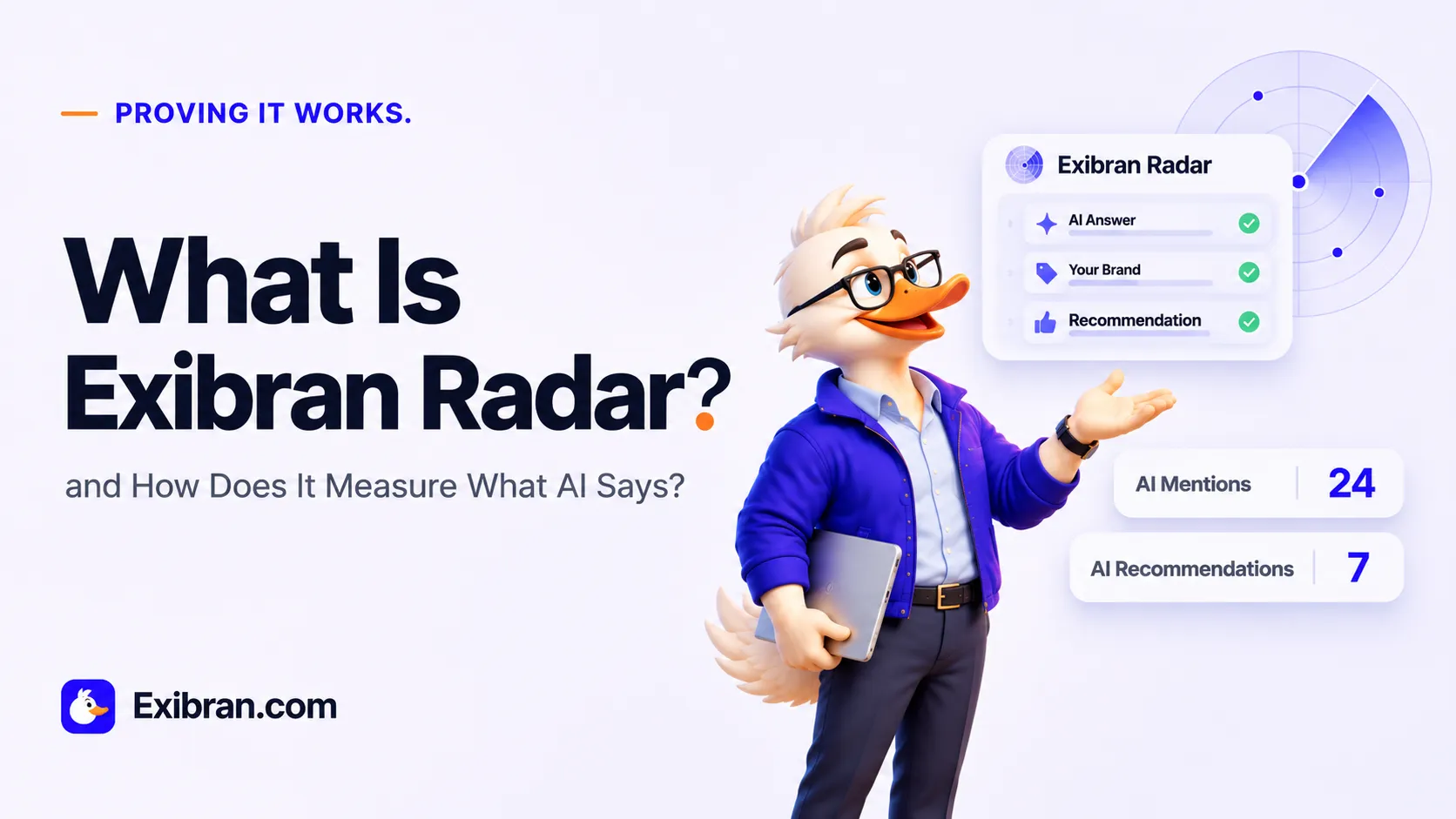
Exibran Radar is a private tool I use to measure what AI assistants say about a business. It asks the AI apps your buyers' questions several times, saves every answer word for word, tags which brands were mentioned and which one was picked, and feeds a report I review before it goes to a client. It is not sold as software.
Exibran Radar is the tool I use to find out what AI assistants say about a business. I run it for my own research and for client work.
This page explains what it does, so you can judge the numbers I publish. I update it when Radar changes.
Key takeaways
- Radar asks the AI apps your buyers' questions, many times, and saves every answer word for word.
- It separates a mention from a pick. Being listed is not being chosen.
- Every rate comes with a 95% range, and I review the tags before anything is published.
- It is a private tool for my own research and client work, not a public product.
What Is Exibran Radar?
A private tool that asks AI your buyers' questions
You give me a business name, buyer's location, and a website. Radar works out what the buyers ask, then asks the AI tools those questions many times.
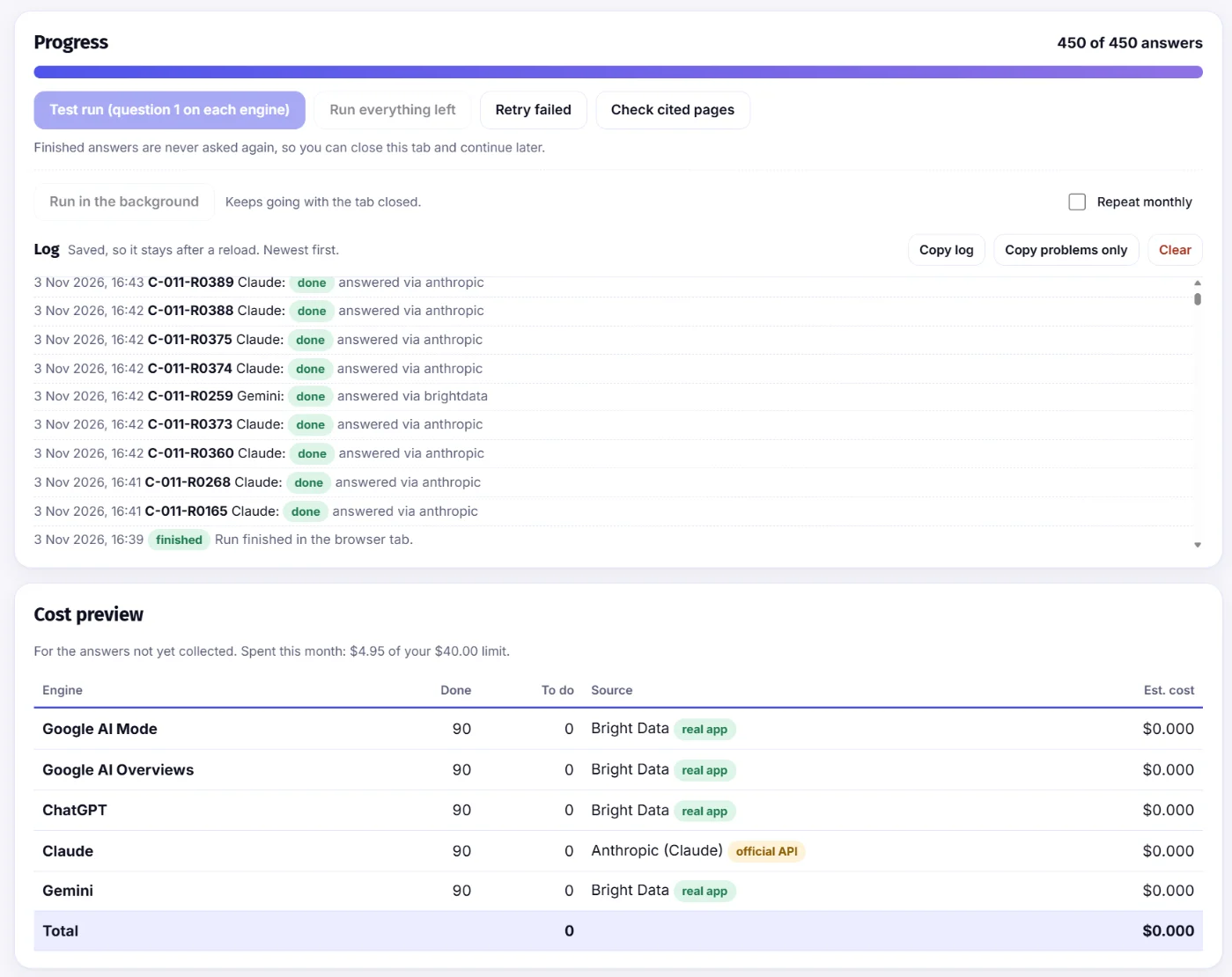
It saves every answer word for word and records which brands each answer mentions.
The result is a set of numbers, the real answers behind them, and a report I check before it goes anywhere.
Who Uses It, and Is It for Sale?
Me and my clients. It is not a public product.
Radar is not for sale as software, and there is no sign-up. I run it myself.
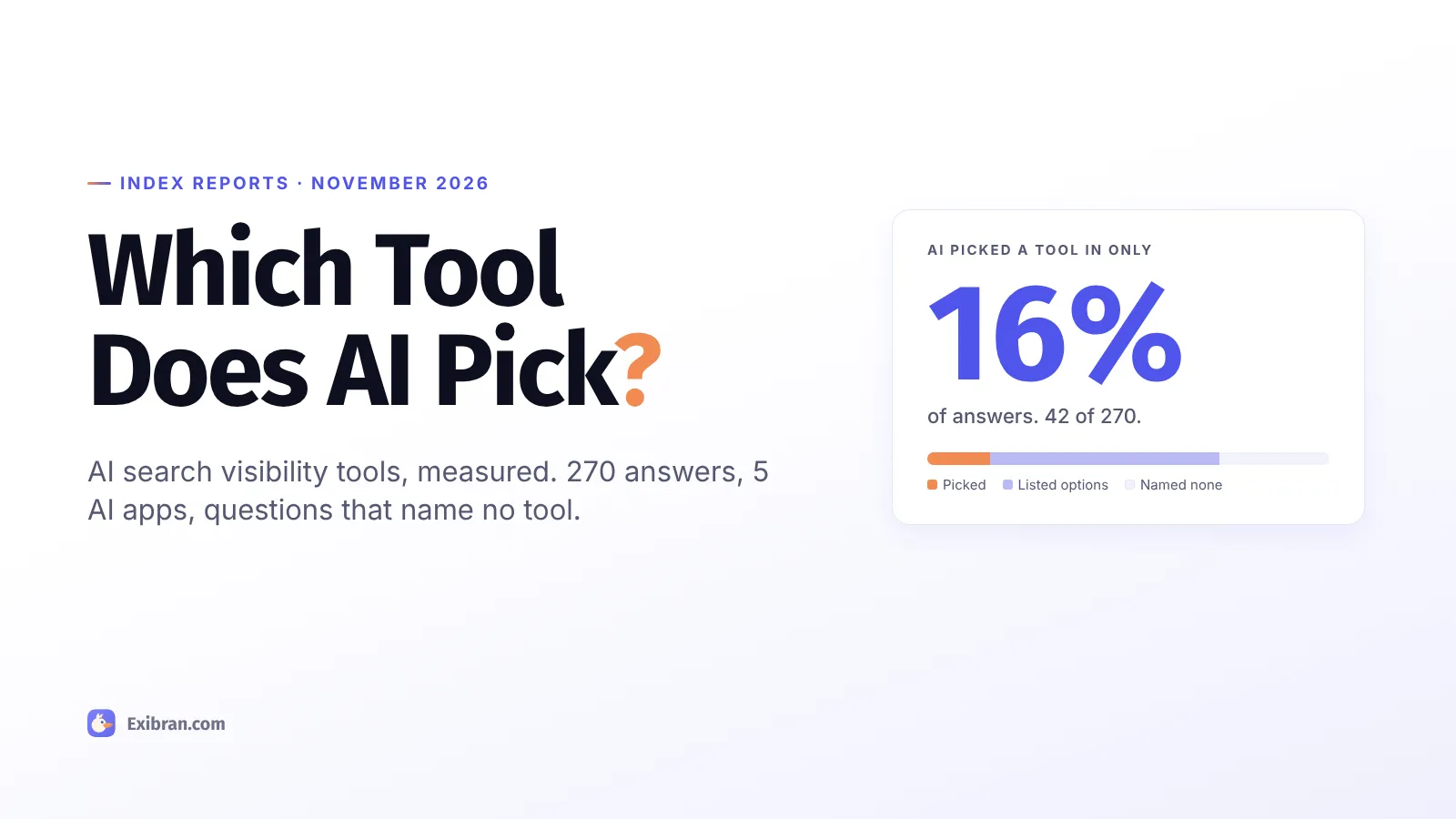
The Index reports, such as the November 2026 Index, come from it, and so do the free AI visibility checks and client reports. If I ever open it up, I will say so here.
How Does It Work?
Five steps, from business name to client report
- Understand the business. I start from the website and research who buys and what they ask.
- Write buyer questions. They cover the stages a buyer goes through, from first searching the category to comparing options and checking trust. I label how I found each question, so an observed question is never mixed up with an inferred one.
- Ask the AI apps. Each question is asked several times on each app, with the country and language set.
- Read every answer. Radar records which brands were mentioned, in what order, which sites were cited, and whether one brand was picked.
- Review and report. I read the answers, fix the tags and write the report.
How Does Radar Know a Tool Was Picked?
It separates a mention from a pick
A mention means the brand appears anywhere in the answer.
A pick means the answer's own verdict chooses the brand, for example, "I'd go with X" or "best overall: X". Being listed first is not a pick.
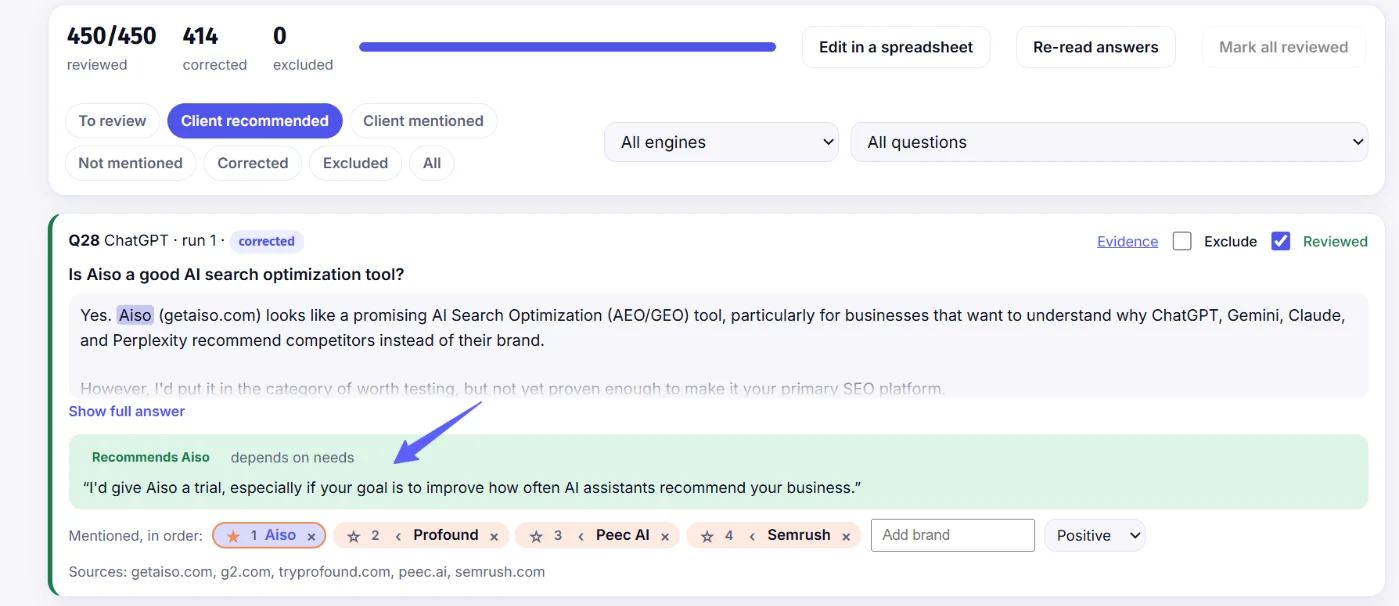
Radar tags both, and I check the tags against the answer text. The full definitions are in the AI Pick Rate guide.
What Does It Report?
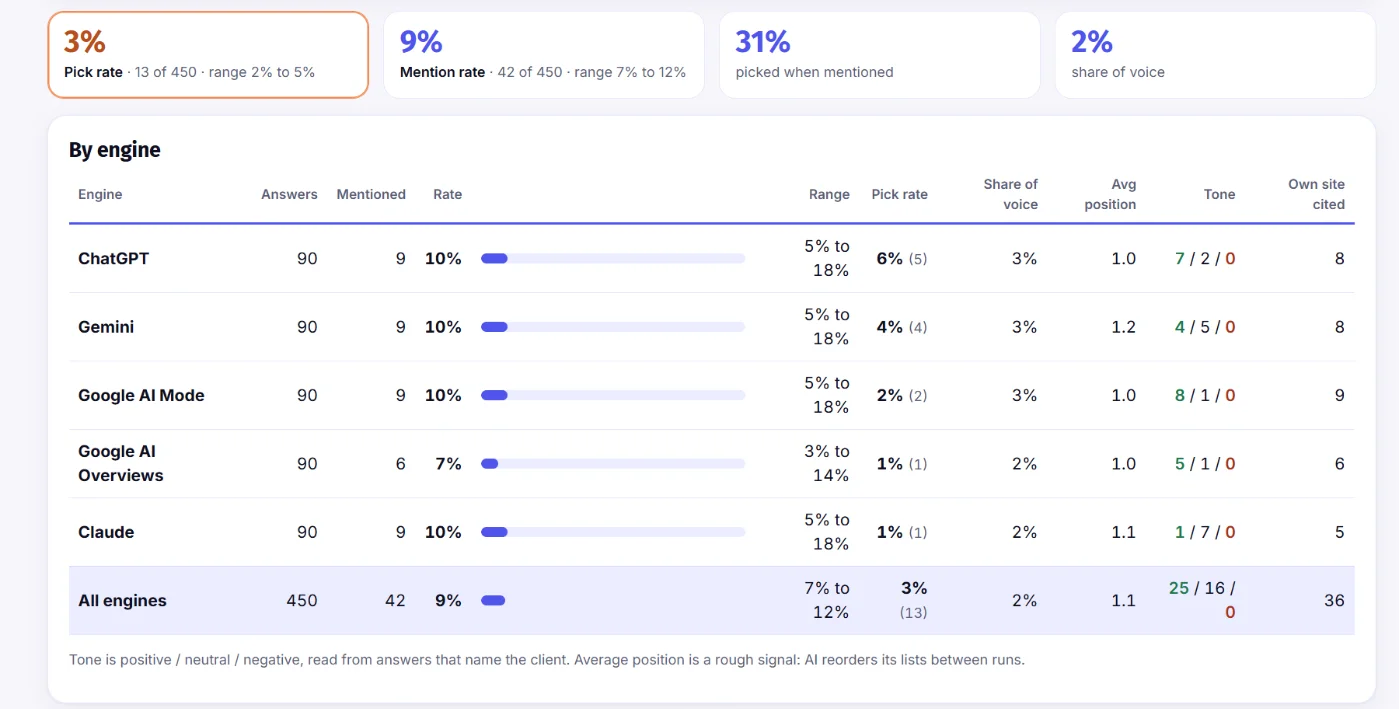
Rates with ranges, plus the answers behind them
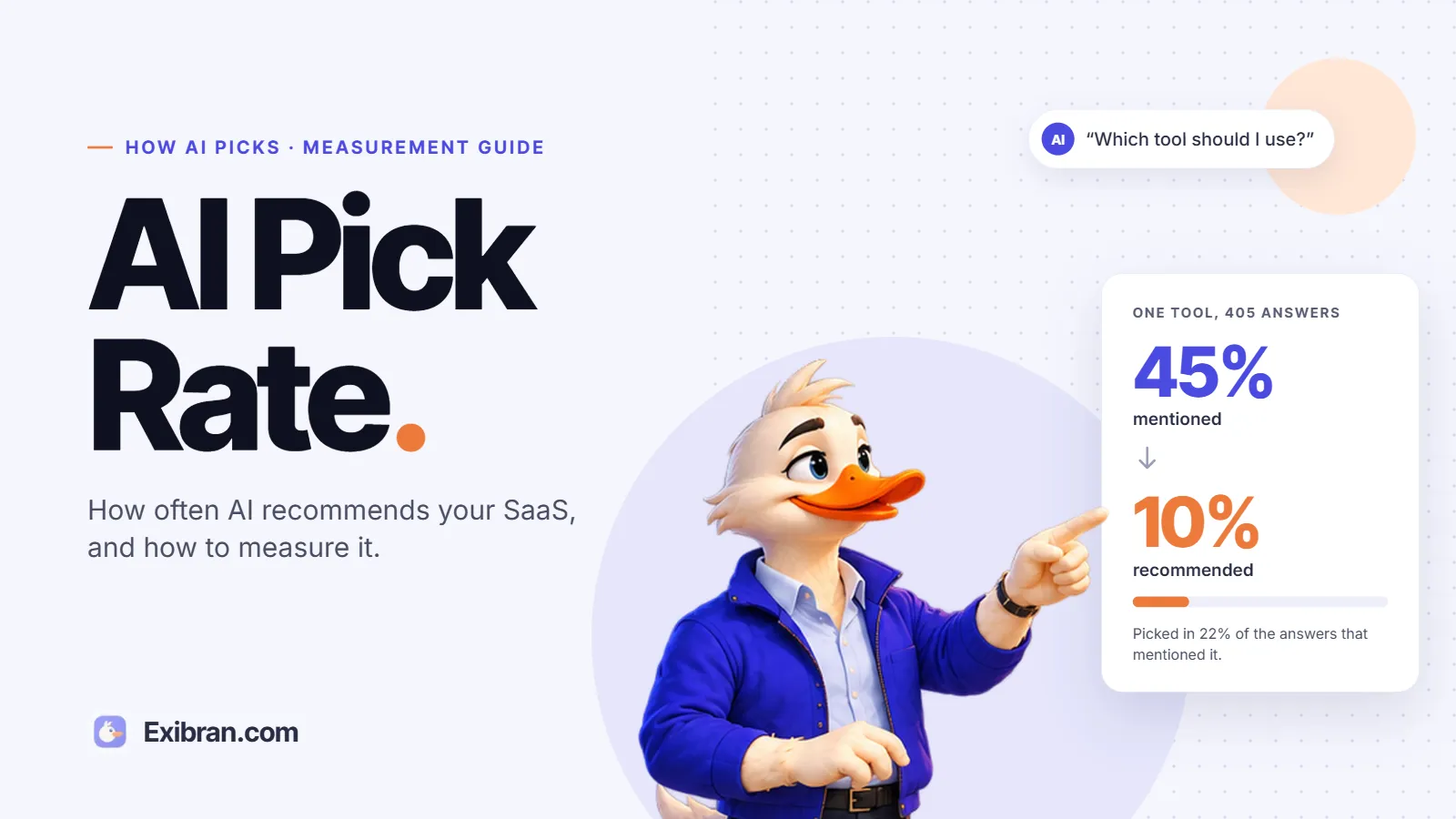
- Mention rate and pick rate, each with a 95% range, so small gaps show up as ties.
- Results by AI app, so you can see which one favours you and which does not.
- Which brands AI picks instead, and what it says about them.
- Which sites AI cites, and where your competitors are listed and you are not.
- Before and after, when a check is repeated.
What Else Does It Check?
Whether AI crawlers can read the site
Radar also checks whether the major AI crawlers are allowed on a site and whether its pages can be read by them. A blocked crawler can keep a good product out of AI answers.
What Are Its Limits?
It measures what AI says, not what is true or what sells
- AI answers change from ask to ask, so I ask each question several times and report ranges.
- The answers Radar collects may not match exactly what a person sees in the app… which is common.
- The tagging makes mistakes, which is why I review it. I am one reviewer, with AI help.
- The questions come from my research. A different list could give a different ranking.
- It shows which sites AI cited, not which page on the site.
- It does not measure traffic, leads, or sales. It measures what AI says.
The methodology page covers how I apply it to the Index reports.
What Has Changed in Radar?
Changelog
- 4 November 2026: first version of this page.
What Does AI Say About Your Product?
I run Radar for B2B SaaS teams at Exibran. You send your product name, and I send back the real answers, word for word, with your pick rate and its range.
Frequently asked questions
Is Exibran Radar available to buy or sign up for?
No. It is a private tool I use for my own research and for client work. If that changes, this page will say so.
Which AI assistants does Radar ask?
ChatGPT, Gemini, Perplexity, Google AI Mode, Google AI Overviews, Claude and others, depending on the job. The November 2026 Index used five.
Does Radar decide on its own which tool was picked?
No. Radar tags each answer first. Then I read the answers and fix the tags myself.
Can Radar tell me why AI picks a competitor?
It shows what AI said and which sites it cited, so you can see where a competitor appears and you do not. It cannot prove why an AI chose one tool over another.
Published
Add Exibran as a preferred source on GoogleJoin the conversation
Comments
Comments are closed on this post.
Bran’s waiting for the first comment
Ask a question, share what AI says about your brand, or tell Michael where you disagree. You will get a reply.